Understanding the interplay between cognitive biases and the backend-loaded nature of wealth expansion is essential for any market participant seeking sustainable growth.
The Non-Linear Engine of Absolute Capital Growth
Human cognition naturally processes data through linear progression. If an individual invests capital, the brain expects a steady, predictable trajectory of visual expansion. Wealth accumulation via compounding, however, operates on a geometric scale.
The mathematical formula for compound interest dictates that capital grows exponentially over time. During the first half of an investment timeline, the primary driver of portfolio growth is the principal contribution. The actual yield generated on that capital appears small, often leading to investor fatigue.
The structural shift occurs in the latter stages of the timeline. As the accumulated yield begins to generate its own returns, the compounding engine detaches from the initial principal. By the time an allocation enters its final ten-year window, the portfolio possesses a massive capital base. At this scale, even average annual returns generate absolute dollar gains that dwarf the combined growth of the previous decades.
Reaching the Financial Inflection Point
To visualize how this backend loading operates in practice, consider a structured asset allocation over a thirty-year horizon. The table below outlines how a portfolio compounding at a consistent rate experiences an asymmetric distribution of wealth, demonstrating why early patience dictates ultimate success.
| Investment Phase | Primary Growth Driver | Visual Portfolio Impact | Psychological Risk Level |
| Years 1–10 | Out-of-pocket principal deposits | Linear, slow baseline growth | High (due to perceived lack of progress) |
| Years 11–20 | Balanced mix of deposits and market yield | Moderate acceleration | Medium (temptation to lock in minor gains) |
| Years 21–30 | Reinvested earnings compounding on a massive base | Vertical, exponential expansion | Low (clear visibility of financial independence) |
This distribution underscores why the final decade holds the greatest numerical weight. An investor who exits their position at year twenty does not simply lose the last ten years of time; they forfeit the specific window where the absolute dollar output of their capital reaches its peak efficiency.
Overcoming the Psychological Hurdles of the Silent Years
Because the early phases of compounding yield minimal visual feedback, investors face significant cognitive friction. Behavioral economists refer to this period as the "silent years" of wealth creation—a phase where disciplined financial behavior coexists with an seemingly stagnant portfolio balance.
Several psychological biases actively work against the investor during this timeline:
-
Present Bias: The tendency to overvalue immediate rewards over significantly larger future payouts, tempting individuals to liquidate long-term assets for current consumption.
-
Hyperbolic Discounting: A cognitive distortion where the perceived value of a future return declines the further out it is pushed, making a distant financial inflection point feel mathematically irrelevant today.
-
Action Bias: The urge to take visible financial action during market volatility, which frequently results in over-trading, unnecessary fee accumulation, and interrupted compounding cycles.
Expert Insight: The Cost of Interruption
Charlie Munger famously noted that the first rule of compounding is to never interrupt it unnecessarily. Every time an investor liquidates an allocation, shifts strategies due to short-term market sentiment, or breaks an investment contract early, they reset their compounding clock back to year one. Managing your psychology is far more critical to long-term returns than trying to time the exact bottom of an asset market.
Maintaining a long-term position requires decoupling emotional satisfaction from daily portfolio balances. Cultivating an automated approach to wealth management removes the necessity for daily discipline, allowing the geometric curve to mature undisturbed.
Strategic Frameworks for Long-Term Asset Acceleration
Maximizing the output of the final ten years requires deploying structural financial frameworks that actively protect and accelerate capital during the early and middle phases of the horizon. Relying on manual oversight often introduces human error and emotional vulnerability into the equation.
Modern financial platforms mitigate these risks by hardcoding compounding mechanics directly into the investor's portfolio interface.
Automated Reinvestment and Compound Adjustments
The most dependable methodology for securing backend exponential growth is the utilization of automated reinvestment protocols. When selecting structured wealth vehicles, prioritizing options that feature direct yield compounding ensures that every unit of return is instantly converted into a productive asset.
For instance, utilizing a dedicated investment profit calculator allows market participants to model the precise divergence between linear yield distribution and automated compounding over a multi-year timeline. By interacting with a smart investment calculator tool, investors can visualize the exact numerical weight of the final ten years before dedicating capital. This visual validation bridges the psychological gap, turning an abstract mathematical concept into a concrete, quantifiable target.
Diversification Across Capital Structures
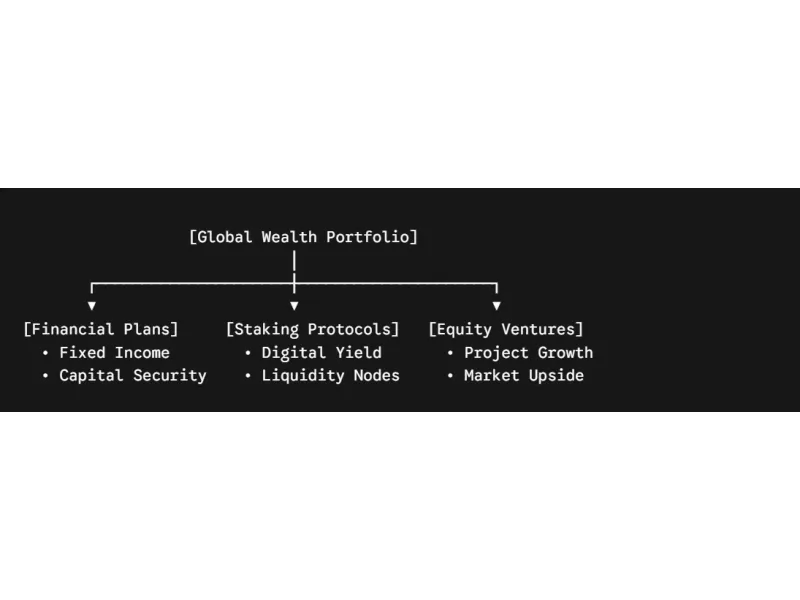
To ensure a portfolio survives long enough to reach the high-yield final decade, risk must be distributed across varied asset classes and timelines. Diversifying structural models shields the aggregate capital base from catastrophic drawdowns in any single sector.
-
Fixed-Term Financial Allocations: Utilizing structured financial investment plans offers baseline predictability. These vehicles provide clearly defined terms and guaranteed compounding options, serving as the stable core of an accumulation strategy.
-
Digital Yield Protocols: Incorporating structured staking plans allows investors to generate continuous yields on digital assets using live market conversions. This introduces a high-velocity yield component that operates independently of traditional fiat banking systems.
-
Real-World Enterprise Funding: Allocating capital toward diversified asset classes, such as choice listings found when investing in stocks or funding direct debt and equity models, captures corporate productivity and broader economic expansion.
Next Steps
The mathematics of compounding prove that patience is not merely a virtue; it is a structural prerequisite for absolute wealth generation. The visually flat baseline of the first twenty years is the exact foundation required to launch the vertical growth of the final ten. Interrupted compounding is the ultimate destroyer of long-term prosperity.
To secure your future financial inflection point, transition away from manual portfolio intervention and toward automated, structured frameworks. Utilize an accurate ROI calculator today to map out your long-term target, define your structural risk boundaries, and commit to an uninterrupted timeline that allows the backend of the curve to execute its design
Comments
0 comments
Write a comment