This guide outlines the mathematical frameworks, core metrics, and strategic models required to map out capital growth over time using data-driven methodologies.
Key Metrics in Passive Income Calculations
Accurate forecasting depends on isolating specific financial variables. When modeling the trajectory of a portfolio, four primary metrics dictate the velocity of expansion:
-
Initial Principal ($P$): The base capital deployed at the beginning of the calculation period.
-
Contribution Rate ($PMT$): Additional capital injected into the portfolio at regular intervals (monthly, quarterly, or annually).
-
Rate of Return ($r$): The annual yield generated by an asset class, expressed as a percentage.
-
Compounding Frequency ($n$): The number of times earnings are calculated and reinvested within a year (e.g., monthly compounding means $n = 12$).
Understanding Nominal vs. Real Yield
Calculating gross returns provides an incomplete picture of purchasing power. To achieve true accuracy, calculations must account for inflation and platform transaction costs, yielding the Real Rate of Return.
$$\text{Real Rate of Return} \approx \text{Nominal Rate} - \text{Inflation Rate} - \text{Fees}$$
Accounting for fees—such as standard asset management costs or a fixed trading fee per transaction—prevents structural deficits in long-term projections.
The Compound Interest Formula
The baseline mathematical architecture for passive income expansion relies on the standard compound interest formula for a lump sum:
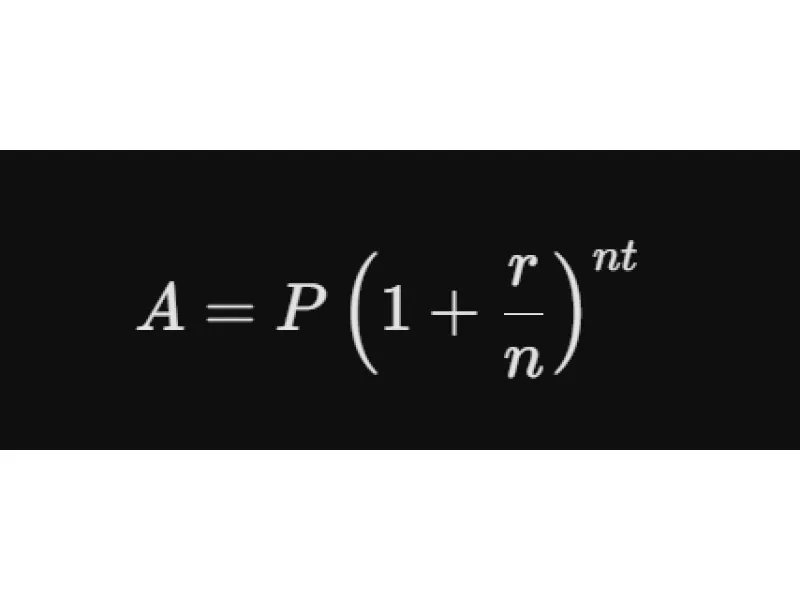
Where $A$ represents the final future value of the investment, and $t$ equals the total duration in years.
Step-by-Step Calculation Frameworks
To calculate your returns over extended horizons, calculations must scale from basic lump-sum models to complex multi-asset projections. Using an investment profit calculator streamlines this process, but executing the manual calculations provides deep insight into asset behavior.
Step 1: Calculate Lump-Sum Compounding
When initial capital is locked without additional deposits, growth relies entirely on the reinvestment of earnings. For instance, if an investor locks capital into structured financial investment plans featuring a fixed interest rate, the compounding velocity matches the preset duration unit.
Step 2: Incorporate Regular Contributions
Most growth strategies utilize recurring capital injections. When regular contributions are added at the same frequency as compounding, the formula expands into a future value of an ordinary annuity:

This equation showcases how consistent, incremental additions accelerate capital accumulation alongside organic interest.
Step 3: Model Asset Class Variances
Passive income strategies rarely rely on a single asset class. Modern portfolios split allocations across distinct risk frameworks to optimize yield:
-
Fixed-Income Products: Provide predictable returns with defined maturity terms, making future cash flow forecasting highly precise.
-
Crypto Staking: Rewards are calculated as a Percentage Yield (PY) over a set duration. Projections must factor in live price conversion and token volatility.
-
Equities and Shares: Generate returns via price appreciation and periodic dividend payments. These require modeling daily volatility limits and historical dividend trends.
-
Project Funding: Ventures structured around equity participation deliver variable returns proportional to actual project profits, introducing a broader band of outcome scenarios.
Comparative Projections Across Asset Structures
Different structures yield distinct growth velocities based on how profits are distributed and whether compound interest is enabled. The table below compares historical growth models across standard portfolio configurations.
|
Investment Class |
Primary Return Mechanism |
Compounding Potential |
Risk Profile |
|
Fixed Investment Plans |
Predetermined interest rate |
High (via automated compounding) |
Low / Insured |
|
Digital Asset Staking |
Percentage Yield (PY) on tokens |
Exponential (via token accumulation) |
Moderate |
|
Market Equities |
Price movement & dividends |
Variable (via dividend reinvestment) |
High |
|
Project Equity |
Proportional profit sharing |
Cyclical (reinvestment upon project deadline) |
Balanced to High |
Expert Insight: When modeling long-term passive income, prioritize structural capital security over volatile high-yield assets. Utilizing risk mitigation features—such as an optional insurance coverage layer or asset-backed project funding—safeguards the principal foundation from catastrophic market drawdowns.
Mitigating Early Exit and Downside Variables
True passive income tracking requires budgeting for frictions and worst-case scenarios. Portfolios must maintain liquidity profiles to absorb unexpected events without derailing compound interest schedules.
Factor in Early Termination Penalties
If an urgent liquidity need forces an early exit from a structured plan, the calculation must adjust for a penalty fee.
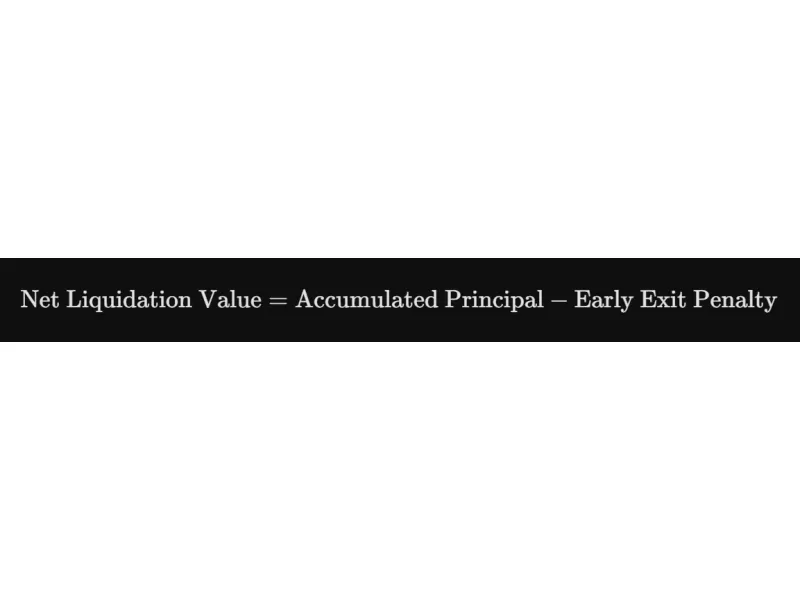
A configurable penalty fee typically discourages premature liquidation, meaning emergency access to funds will reduce the realized rate of return significantly.
Model Volatility and Structural Circuit Breakers
For market-driven assets, calculations should include downside protection limits. If trading equities within a managed environment, look for systems governed by a daily volatility circuit breaker or hard price floor and ceiling constraints. These structural limits restrict extreme price swings, allowing analysts to establish a reliable baseline for the worst-case variance in a portfolio’s value.
Next Steps: Designing Your Growth Model
To build an accurate, personalized passive income projection, execute the following implementation steps:
-
Establish the Capital Base: Define your exact starting cryptocurrency or fiat allocation.
-
Select Your Infrastructure: Choose verified, compliant environments. Review global credentials—such as platforms holding a MiFID II License or operating as a registered entity in established financial hubs like the Cayman Islands—to eliminate counterparty risk.
-
Map the Timeline: Align your durations (days, weeks, months, or years) with your liquidity requirements.
-
Automate Reinvestment: Toggle auto-renew or compounding interest settings to ensure returns accumulate seamlessly without execution delays.
-
Simulate Scenarios: Utilize a smart investment calculator tool to stress-test your strategy against different interest rates and timeline shifts.
By formalizing these calculations, you shift from speculative tracking to precise financial engineering, protecting your capital foundation while maximizing long-term yield.
Comments
0 comments
Write a comment